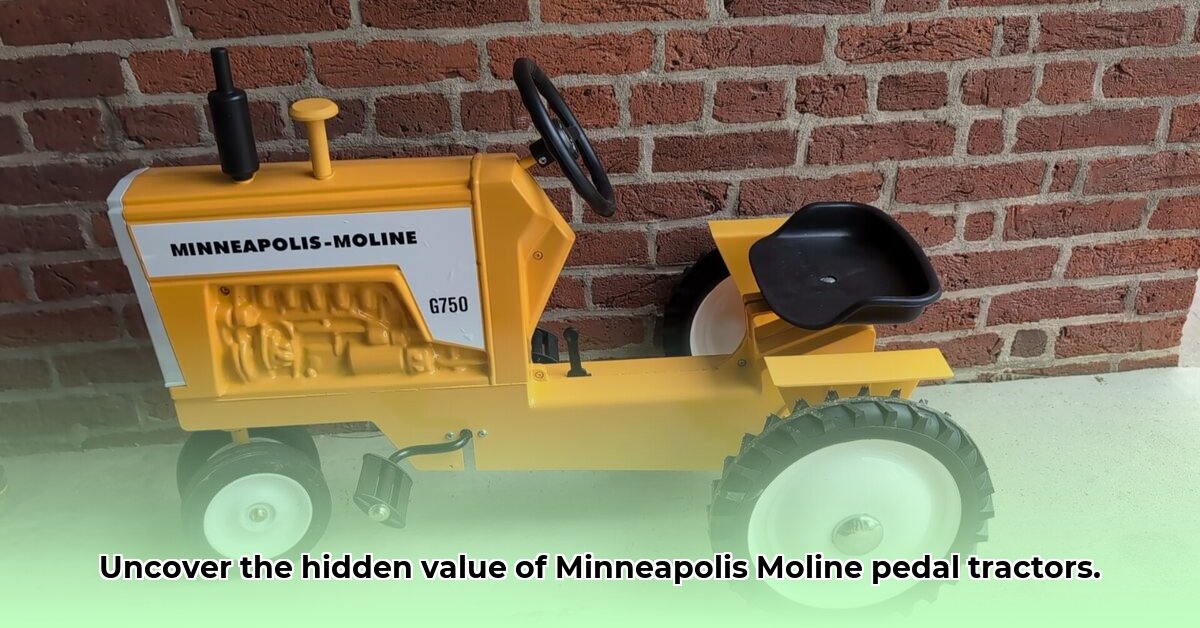
These charming miniature replicas of classic Minneapolis-Moline tractors aren't just toys; they're highly sought-after collectibles, pieces of Americana reflecting a bygone era of farming. But with increasing popularity comes a rise in counterfeits. This guide provides a comprehensive approach to identifying, valuing, buying, selling, and maintaining these miniature works of art. For more on pedal tractors, check out this related site.
Identifying Authentic Minneapolis-Moline Pedal Tractors
Authenticating a Minneapolis-Moline pedal tractor requires careful attention to detail. While a simple glance might seem sufficient, a close examination reveals crucial distinctions between genuine articles and expertly crafted reproductions. Let's start with the most important piece of information: the serial number.
Serial Numbers: Often located on the rear clutch housing, the serial number is your primary tool for precise model identification. A clear, legible number unlocks a wealth of information about the tractor's origin and production year. Cross-referencing this number with online databases and collector forums can provide crucial details for authentication. Is the serial number easily visible and clearly stamped or is it faded, worn or missing entirely?
Visual Cues: Beyond the serial number, several visual cues contribute to the authentication process. Note the tractor's color. Did Minneapolis-Moline use a specific shade of yellow or orange during that production year? Inconsistencies in color could indicate a reproduction designed to mimic the original without matching the exact hue. Pay close attention to the specifics of the tractor's front end. The design can vary across years and between models, being narrow, wide or adjustable depending on the design. Even small differences in design can signal a real or fake tractor.
Decals and Markings: The decals and markings should be crisp and clear, accurately positioned and true to the original models. Are the logos sharp and well-defined, or are they fuzzy and faded? Are they placed correctly on the body of the tractor? Any inconsistencies should raise a red flag. High-quality images and careful inspection are paramount in this aspect of verification.
Material and Construction: Examine the materials used in the construction of the tractor. Is the metal heavy-gauge and durable or thin and flimsy? Are the castings sharp, clean, and well-defined or rough and inconsistent? These characteristics often reflect the quality of the manufacturing process and are key aspects of determining authenticity. A genuine Minneapolis-Moline pedal tractor will exhibit superior material quality and sturdiness compared to its replicas.
Checklist for Authenticity:
| Feature | Authentic Minneapolis-Moline Pedal Tractor | Counterfeit/Replica |
|---|---|---|
| Serial Number | Clearly visible, legible, and verifiable | Illegible, missing, or inconsistent with known models |
| Decals/Markings | Crisp, clear, correctly placed, accurate to the model and year | Blurry, faded, misplaced, incorrect, or absent |
| Casting Quality | Sharp, clean lines, consistent finish | Rough, dull, inconsistent finish, poorly defined details |
| Color Accuracy | Accurate color scheme for the specific model and year | Off-color, inconsistent, or faded paint |
| Material Quality | Heavy-gauge metal, durable construction | Lighter, thinner metal, less sturdy construction |
| Overall Condition | Generally good considering age, consistent wear patterns | Poor overall condition, signs of hasty repairs |
Expert Opinions: If you are still unsure after examining these features, seeking out opinions from experienced collectors and restoration experts within online forums or at collector events is always recommended.
Assessing Value and Condition of Your Minneapolis Moline Pedal Tractor
The value of your Minneapolis Moline pedal tractor depends on several factors: rarity, condition, and completeness. Rare models, naturally, command higher prices. Think of it as the collectible card market – a rare card in excellent condition is worth much more than a common card in poor condition.
Rarity: Certain models and variations are inherently rarer than others, driving up their desirability among collectors. Thorough research into the production history of Minneapolis-Moline pedal tractors is crucial for determining rarity.
Condition: The overall condition significantly impacts value. A pristine tractor in its original, undamaged box can command a much higher price than one showing signs of wear and tear. Even minor scratches or scuffs will slightly diminish its market value.
Condition Grading:
| Condition Grade | Description | Approximate Value Impact |
|---|---|---|
| Excellent | Pristine, original box, no significant flaws | Highest Value |
| Very Good | Minor wear, original box (possibly slightly damaged), few minor flaws | High Value |
| Good | Moderate wear, box may be missing or damaged, some imperfections | Medium Value |
| Fair | Significant wear, damage present, possibly missing small parts | Lower Value |
| Poor | Heavily damaged, missing major parts, significant rust or decay | Lowest Value |
Completeness: The presence of original accessories or packaging significantly enhances value. A tractor in its original box, with all its original parts and intact decals, is far more valuable than one missing parts or showing signs of repair. Documentation is critical as well. If you have any original documentation or sales receipts, keep them safe.
Market Research: Researching recently sold comparable tractors is paramount for accurate valuation. Online auction sites and collector forums provide valuable insights into current market prices.
Buying and Selling Minneapolis Moline Pedal Tractors
Navigating the market for Minneapolis-Moline pedal tractors requires caution and due diligence. Always carefully vet sellers, verifying their legitimacy through online reviews or references. Never rush into a purchase. Request many pictures and videos from various angles; ask detailed questions about the tractor’s history and condition.
Buying: When purchasing online, use secure payment methods and reputable shipping services to protect your investment. Inspect the tractor thoroughly upon arrival, comparing it to the seller’s description.
Selling: When selling your tractor, ensure your advertising materials are accurate, including many high-quality photos showcasing its condition. Use clear, concise language to describe the condition. Be upfront about any imperfections to avoid potential disputes. Research comparable sales to establish a fair asking price.
Maintaining and Restoring Minneapolis-Moline Pedal Tractors
Regular cleaning and maintenance are essential for preserving the value and aesthetic appeal of your Minneapolis-Moline pedal tractor. Use gentle cleaning methods, avoiding harsh chemicals that could damage paint or metal.
Cleaning: Regular cleaning with a soft cloth and mild soap is sufficient for routine maintenance. Avoid abrasive cleaners or harsh chemicals that could damage the paint or the metal.
Minor Repairs: Minor repairs, such as tightening bolts or replacing small parts, are often manageable for enthusiasts. Original parts will always be worth more than aftermarket replacements.
Major Restoration: If significant restoration is required, consider seeking the help of an experienced restorer. Improper repairs can drastically reduce the value of the tractor. Document the process with photographs. Often a slightly worn and original tractor is more valuable than a poorly restored one.
The information provided here serves as a foundation for your exploration of Minneapolis-Moline pedal tractor collecting. Remember, continuous learning and engagement with the collector community are crucial for navigating this rewarding and dynamic hobby.